I am astounded that in a month I will be one half of the way through my third year of medical school. As I've gone through a handful of rotations and have spent more time than I cared to at the hospitals, I've noticed something that has been irritating me. As a student, for as much as we are active and participating in patient care, we spend a lot of time observing. We watch residents, attendings, and nurses, seeing how they interact with patients and approach the art of medicine. The mantra that is often taught, or supposed to be taught, or ideally taught but secretly thought by some of those teaching as foolish, is that in medicine you should not treat the disease; you should treat the patient.
The sentiment of that statement rings true with how I feel. The execution? Not so much. Many physicians stop short of treating the disease, let alone the patient. Instead, they treat the symptom or a specific manifestation of the disease. An ID doctor treats the infection; the surgeon opens and drains the abscess; the endocrinologist manages the diabetes. This makes sense from a practical point of view. If I have learned anything over the past two and a half years it is that I cannot learn everything. An expert should handle the complexities and nuanced management of certain conditions. But what happened to treating the patient? (This is not to say specialists cannot treat the patient instead of a symptom or aspect of disease; it simply means I haven't seen it yet. I am wanting to, believe me.)
Recently on rounds, the attending reminded us that "In medicine, we treat the patient, not the numbers." This statement was made regarding abnormal lab values. It was meant to remind the students and residents that we cannot simply try to correct abnormalities on paper; we must look at the patient clinically to confirm, adapt, and change plans. Sadly, it was meant on nothing more than a level of clinical correlation. As opposed to a grander statement about the lofty responsibility of treating the patient, it was about confirming laboratory findings clinically. What this statement actually did for me was point out the failures of the medical team to go beyond a talking point and treat more than the patient; I instead wondered: what about the person?
Too often it seems medicine becomes bogged down in labs or physical findings. Sodium is corrected; cholesterol is monitored. While these things are astoundingly important, I do not want to be a physician who works through tunneled vision. I do not want to be a physician who treats the patient instead of the disease.
I want to be the doctor who cares for the person.
Most of the people I have worked with thus far- who no doubt care about patients immensely and typically practice good medicine- do not focus on the patient as a person. Maybe this is naive and foolish. Maybe I cannot actually appreciate the weight of what it means to be a physician and all its struggles because I haven't reached that point yet. Honestly, I do not know and don't get me wrong: there have been a handful of docs who continually impress me both with their control of medical knowledge and their approach to patient care. Such physicians do exist. I just suppose my hope is to join their ranks in one and half years (technically) and four and half years (board-certified-ly).
Until next time.
Showing posts with label Medicine. Show all posts
Showing posts with label Medicine. Show all posts
Wednesday, November 16, 2011

Thursday, February 10, 2011
Bugs and More
For the past three weeks, and for the next three as well, I have been and will continue to learn all about infectious diseases. Viruses, bacteria, parasites, fungi. You name it, we're probably learning about it. While we are currently about halfway through the process, we've only just begun the bulk of the material (bacteria) yet have completely finished viruses.
Don't get me wrong: viruses are very interesting. At the beginning of ID I thought they were much more impressive than bacteria could be. I mean, come on, bacteria can at least understandably be viewed as tangible organisms. We can see them move and divide. They are cells just like us. They have a cell wall, sure, but we can see the connection. Viruses? They're pretty much just little grenades with nucleic acid, bits of DNA and RNA covered in a protein capsid. How can we rationalize that? Pretty creepy little things.
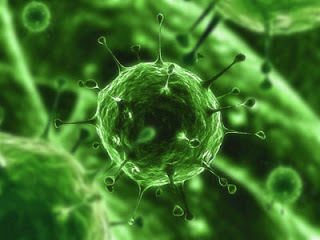 Viruses: addressed "to whom it may concern."
Imagine my shock when we began discussing something that put viruses to shame. Made viruses into pocket-watches while they become the sundial. Of what do I speak? Prions. They are nothing more than little chunks of protein that infect cells and then screw things up. By "screw things up" I mean "get into your brain and then create tiny holes." They're the culprit behind disease like Kuru and Mad-Cow. They make no sense. Humans, animals, plants, etc? Gobs of cells all chocked full of organelles and DNA striving to make a living in life. Bacteria? Little cuties we can't help but feel sorry for. It's like they're trying to be us but just can't ever quite get there (don't feel too bad for them: Exhibit A). Viruses? Jerks that just keep trying to take over; the ants at our proverbial picnic.
But Prions? They just want to watch the world burn.
 Namely because they would survive it.
What do I mean by this? In 1986, people in the UK burned over 4 million cows who might have been infected with BSE (Mad cow). And I mean torched. We're talking over 1000F heat. They then buried the ashes underground in a concrete container until 1998. TWELVE YEARS. At that point they opened the container and found the prions still smiling right back, waiting to continue their rampage of destruction. Wicked, eh?
So should we be worried? Pouring buckets of cash into prion research so that we don't all have chunks of protein infecting our brain?!
Not really. Turns out the major way to get a prion disease is via ingestion of infected tissue, also known as eating brains. This is why Kuru has only ever been historically found among people of the Fore tribe in Papau New Guinea (who engaged in cannibalism) and BSE was spreading because of the use of animal feed made up of dead-and-processed-other-animals. I'm going to spare you all the lovely photo of such a mental image that was included in our lecture. (Edit: to clarify, the most prevalent form of prion disease in humans is CJD which comes from ingesting infected beef, which likely themselves had infected food from animal products. Details.)
Oh, medical school.
Until next time.
Don't get me wrong: viruses are very interesting. At the beginning of ID I thought they were much more impressive than bacteria could be. I mean, come on, bacteria can at least understandably be viewed as tangible organisms. We can see them move and divide. They are cells just like us. They have a cell wall, sure, but we can see the connection. Viruses? They're pretty much just little grenades with nucleic acid, bits of DNA and RNA covered in a protein capsid. How can we rationalize that? Pretty creepy little things.

Imagine my shock when we began discussing something that put viruses to shame. Made viruses into pocket-watches while they become the sundial. Of what do I speak? Prions. They are nothing more than little chunks of protein that infect cells and then screw things up. By "screw things up" I mean "get into your brain and then create tiny holes." They're the culprit behind disease like Kuru and Mad-Cow. They make no sense. Humans, animals, plants, etc? Gobs of cells all chocked full of organelles and DNA striving to make a living in life. Bacteria? Little cuties we can't help but feel sorry for. It's like they're trying to be us but just can't ever quite get there (don't feel too bad for them: Exhibit A). Viruses? Jerks that just keep trying to take over; the ants at our proverbial picnic.
But Prions? They just want to watch the world burn.

What do I mean by this? In 1986, people in the UK burned over 4 million cows who might have been infected with BSE (Mad cow). And I mean torched. We're talking over 1000F heat. They then buried the ashes underground in a concrete container until 1998. TWELVE YEARS. At that point they opened the container and found the prions still smiling right back, waiting to continue their rampage of destruction. Wicked, eh?
So should we be worried? Pouring buckets of cash into prion research so that we don't all have chunks of protein infecting our brain?!
Not really. Turns out the major way to get a prion disease is via ingestion of infected tissue, also known as eating brains. This is why Kuru has only ever been historically found among people of the Fore tribe in Papau New Guinea (who engaged in cannibalism) and BSE was spreading because of the use of animal feed made up of dead-and-processed-other-animals. I'm going to spare you all the lovely photo of such a mental image that was included in our lecture. (Edit: to clarify, the most prevalent form of prion disease in humans is CJD which comes from ingesting infected beef, which likely themselves had infected food from animal products. Details.)
Oh, medical school.
Until next time.
Wednesday, November 17, 2010
Alive and Kicking
Contrary to what I can only assume to be popular belief, I am alive and well.
Much to my surprise, or at least cautiously optimistic belief, I successfully defeated the modular of Brain and Behavior. A nine week behemoth, it was advertised to be the most challenging module of the first two years of school- a reputation it seemed both pleased to have and eager to maintain. The most enjoyable result of being done? No more anatomy. A year ago we started in the cadaver lab and have sense made our way from the heart and lungs, through the GI tract, all around the GU system, up and down the extremities, and lastly into the brain, head, and neck. While dissection lab was usually pretty nice and a change-up from regular lecture, it's really nice to be freed from the afternoon time commitment and additional exams.
We're now into the module of Blood and Lymph which is going fairly well; it's very pathology focused which might mean a test that has its devil in the details. I still want nothing more (going on 2 weeks later) than to revel in the joy of being done with B&B, but have decided to get back to the grindstone. If I'm going to dance on the grave of this semester, I want to be damned sure it's dead. I don't know if it's cold in the ground just yet.
So that's what's going on. Fiction writing is still happening, slowly, but I am currently planning on waiting to post more until I have a better story formed. If I had more time, I'd like to be able to finish NaNoWriMo on time. I suppose with my late start, it'll just be a two/three/four month excursion for me. I mean, I'm a little busy with not shaving this month...
It is November, after all...
Until next time.
Much to my surprise, or at least cautiously optimistic belief, I successfully defeated the modular of Brain and Behavior. A nine week behemoth, it was advertised to be the most challenging module of the first two years of school- a reputation it seemed both pleased to have and eager to maintain. The most enjoyable result of being done? No more anatomy. A year ago we started in the cadaver lab and have sense made our way from the heart and lungs, through the GI tract, all around the GU system, up and down the extremities, and lastly into the brain, head, and neck. While dissection lab was usually pretty nice and a change-up from regular lecture, it's really nice to be freed from the afternoon time commitment and additional exams.
We're now into the module of Blood and Lymph which is going fairly well; it's very pathology focused which might mean a test that has its devil in the details. I still want nothing more (going on 2 weeks later) than to revel in the joy of being done with B&B, but have decided to get back to the grindstone. If I'm going to dance on the grave of this semester, I want to be damned sure it's dead. I don't know if it's cold in the ground just yet.
So that's what's going on. Fiction writing is still happening, slowly, but I am currently planning on waiting to post more until I have a better story formed. If I had more time, I'd like to be able to finish NaNoWriMo on time. I suppose with my late start, it'll just be a two/three/four month excursion for me. I mean, I'm a little busy with not shaving this month...
It is November, after all...
Until next time.
Saturday, July 31, 2010
Unforseen Difficulties
The preparation for medical school is ridiculous. If one were to try to compile all the possibilities together, I have no doubt the process would be damned near infinite. Some people start prepping in high school. They take tough science classes, shadow docs, and begin the process of building up a history of interest in medicine. This way, when college rolls around, they can reference all that they've done so far. Then college consists of pre-med courses, volunteer work at hospitals or labs, the entire MCAT preparation and process, and -topping it all off- the application process. Buckets of forms, letters, grades, personal statements, and interviews.
There's a lot to do.
Assuming all of this works out, you're all of the sudden in medical school! You get to become a doctor! Your hard work has paid off! What does school do? Well, they continue with preparation, but this time it's to really become a physician (for now we'll ignore the residency process needed before you can become a practicing physician). In other words, the journey continues.
Some of you might be saying, "Wow, that sounds pretty tough." You, Hypothetical Constant Reader might be right. I won't argue that the process is lengthy and can be challenging. It's true. But I believe the real troubles arise from the unforeseen difficulties. The problems that pop up and create situations you've never even begun to consider in your- literally- years of preparation. All of that preparation has been so that when problems arise, you have the skill set and ability to assess and act. A child presents with shortness of breath. Assess and Act. A young man becomes violent and aggressive as he pesters you for drugs. Assess and Act. An old woman codes on the hospital floor. Assess and Act.
But what happens when unforeseen issues arise within the process of your preparatory education? How do you handle the different thoughts, opinions, ideas, and behaviors of your fellow students and teachers? The situations that arise away from the classroom? How do you assess and act? Do you stick to your own Self and values, possibly straying from the carefully constructed path of the Medical School Journey? Or do you keep quiet, noting your feelings, and hope for the best?
I suppose the real question is: can a person really complete this journey through medicine and end up the same core person at the finish line?
Now you might be asking, "What on Earth is he on about?"
Don't fret, Constant Reader. I'd say all is and will yet be well. I simply sit here thinking, on the cusp of a new year, I see all of the new M1s going through orientation. They anxiously and awkwardly begin their journey. Cramming onto a charter bus to breeze through the other campus. Nervously accepting the white coat in front of your peers. Awkwardly talking and drinking at the parties. I can't help but wonder, how different am I from them? Have I changed over the past year?
Looking back, I'm surprised by how much medical school, and all its tangential connections, have factored into my life in so many different ways. One year ago I wrote my thoughts and hopes on beginning school. Rereading those words now, I feel as though I managed pretty well. Was it easy and did I ever do it alone? Of course not; no way. Many thanks to all who've helped me (especially a certain redhead).
Two points of advice, however, given then by someone who is still wiser than me now, stick out more relevant today:
Until next time.
There's a lot to do.
Assuming all of this works out, you're all of the sudden in medical school! You get to become a doctor! Your hard work has paid off! What does school do? Well, they continue with preparation, but this time it's to really become a physician (for now we'll ignore the residency process needed before you can become a practicing physician). In other words, the journey continues.
Some of you might be saying, "Wow, that sounds pretty tough." You, Hypothetical Constant Reader might be right. I won't argue that the process is lengthy and can be challenging. It's true. But I believe the real troubles arise from the unforeseen difficulties. The problems that pop up and create situations you've never even begun to consider in your- literally- years of preparation. All of that preparation has been so that when problems arise, you have the skill set and ability to assess and act. A child presents with shortness of breath. Assess and Act. A young man becomes violent and aggressive as he pesters you for drugs. Assess and Act. An old woman codes on the hospital floor. Assess and Act.
But what happens when unforeseen issues arise within the process of your preparatory education? How do you handle the different thoughts, opinions, ideas, and behaviors of your fellow students and teachers? The situations that arise away from the classroom? How do you assess and act? Do you stick to your own Self and values, possibly straying from the carefully constructed path of the Medical School Journey? Or do you keep quiet, noting your feelings, and hope for the best?
I suppose the real question is: can a person really complete this journey through medicine and end up the same core person at the finish line?
Now you might be asking, "What on Earth is he on about?"
Don't fret, Constant Reader. I'd say all is and will yet be well. I simply sit here thinking, on the cusp of a new year, I see all of the new M1s going through orientation. They anxiously and awkwardly begin their journey. Cramming onto a charter bus to breeze through the other campus. Nervously accepting the white coat in front of your peers. Awkwardly talking and drinking at the parties. I can't help but wonder, how different am I from them? Have I changed over the past year?
Looking back, I'm surprised by how much medical school, and all its tangential connections, have factored into my life in so many different ways. One year ago I wrote my thoughts and hopes on beginning school. Rereading those words now, I feel as though I managed pretty well. Was it easy and did I ever do it alone? Of course not; no way. Many thanks to all who've helped me (especially a certain redhead).
Two points of advice, however, given then by someone who is still wiser than me now, stick out more relevant today:
-Don't be dazzled by bullshit.
-Make sure all things pass the smell test for veracity, virtue, and truth.I think those are good things to think about and constantly return to. All things considered, I'm looking forward to my second year.
Until next time.
Thursday, July 29, 2010
A Very Talented Man
If there's a party with good music, I will dance like hell all night.

I imagine this to be an accurate representation of both myself dancing and others' reactions. I call those others "losers who should be dancing."
This has never been a problem before. I wouldn't even go so far as to call it a problem in this circumstance, it just had... unforeseen consequences. Literally not seen.
Let me begin by stating my new, and now passionate, belief: drinks should be restricted from the dance floor. Be honest. Have you ever been able to really dance well holding a drink? You're always worried about someone bumping into it or you spilling it on yourself or someone else. You may just be worried about losing any of your precious drink, not even on yourself or others. And forget about looking good while dancing and holding a drink. One arm either becomes a magic stabilizer and awkwardly doesn't move while the rest of your body shakes, or you opt for the up-in-the-air, my-drink-is-safer-up-high hold. Either way, it just doesn't work out. The solution? Ban drinks from the dance floor. It would make everyone less worried and look cooler.
Such a ban would also prevent awkward, dance-ending injuries that freakishly happen out of nowhere and could obviously happen to anyone not just a guy who was GIVING it on the dance floor and has genetically lax knee ligaments.
Obviously.
It's true. I'm such a talented man that God Dance and God Awesomeness must have taken note and said, "Whoa. That is too much dance for a mere mortal. We must stop it. Brother God Misfortune: shut him down." And down he shut me. With a perfect storm of events, my left foot at once betrayed me, jutting quickly to the side of my body riding that frictionless train of spilled beer. Mere nanoseconds later, at the moment when my foot jumped from the beer train and landed at a standstill on dry floor, my body was jostled- unmaliciously- by a fellow dancer. This led Left Knee, previously one of my most dependable soldiers on the battlefield of dance, to be attacked on simultaneously on two fronts. Painfully, he exclaimed,"FFFUUUUUUU[[CENSORED]]!" and hit the ground.
My left knee popped, buckled, and I went down. Having had a past experience of dislocating my right patella and it being surgically repaired, I was worried and cautious. I hopped up and was able to get off the dance floor and onto a nearby bench. The knee felt really tender and sore, but fortunately did not have any sharp or continuous pain. This took any kind of a bone break off the table for my differential diagnosis, but ratcheted a ligament tear to the top of the worry list. Being the stupid man that I am, I tried to "walk it off" and do a few laps around the place. I was able to walk,which was definitely a plus, but could tell it was going to be out of commission for a while. My caring but concerned wife and I were able to make a quiet departure from the reception, grab some NSAIDs and ice from a friend in town, and make our way home. Over the next few days I made a doctors appointment and self-prescribed the RICE protocol and ibuprofen. My knee seemed to improve and I became mildly confident it was a sprain with no tears. Yesterday, the real doctor concurred with my diagnosis. He recommended I take it easy for a week and then slowly work back to normal use and exercise. Also advised was this bold fashion statement.
Such a ban would also prevent awkward, dance-ending injuries that freakishly happen out of nowhere and could obviously happen to anyone not just a guy who was GIVING it on the dance floor and has genetically lax knee ligaments.
Obviously.
It's true. I'm such a talented man that God Dance and God Awesomeness must have taken note and said, "Whoa. That is too much dance for a mere mortal. We must stop it. Brother God Misfortune: shut him down." And down he shut me. With a perfect storm of events, my left foot at once betrayed me, jutting quickly to the side of my body riding that frictionless train of spilled beer. Mere nanoseconds later, at the moment when my foot jumped from the beer train and landed at a standstill on dry floor, my body was jostled- unmaliciously- by a fellow dancer. This led Left Knee, previously one of my most dependable soldiers on the battlefield of dance, to be attacked on simultaneously on two fronts. Painfully, he exclaimed,"FFFUUUUUUU[[CENSORED]]!" and hit the ground.
My left knee popped, buckled, and I went down. Having had a past experience of dislocating my right patella and it being surgically repaired, I was worried and cautious. I hopped up and was able to get off the dance floor and onto a nearby bench. The knee felt really tender and sore, but fortunately did not have any sharp or continuous pain. This took any kind of a bone break off the table for my differential diagnosis, but ratcheted a ligament tear to the top of the worry list. Being the stupid man that I am, I tried to "walk it off" and do a few laps around the place. I was able to walk,which was definitely a plus, but could tell it was going to be out of commission for a while. My caring but concerned wife and I were able to make a quiet departure from the reception, grab some NSAIDs and ice from a friend in town, and make our way home. Over the next few days I made a doctors appointment and self-prescribed the RICE protocol and ibuprofen. My knee seemed to improve and I became mildly confident it was a sprain with no tears. Yesterday, the real doctor concurred with my diagnosis. He recommended I take it easy for a week and then slowly work back to normal use and exercise. Also advised was this bold fashion statement.

I fully expect it to become the hot and wild new trend of the upcoming fall fashion season. I hear it's already huge in Europe.
Pretty strange events, all things considered. My advice? Keep dancing like hell. If you don't already, give such dancing a go the next time you have the chance. It's just too damn fun not to.
Until next time.
Monday, July 12, 2010
Not Quite All-Star Material
I've been in a bit of a dry spell with the blog. Who knows why we've had this high pressure system for so long, but I've decided to go ahead and rain some words down for y'all.
(Y'all? I don't know either. Just go with it.)
So, in honor of my trying to return to form, I'm going to tell you a little story.
As stated previously, I'm currently working in pediatrics. It's been a really good experience thus far, and there have been some really interesting cases and children. This seems to be a general trend in medicine. As much as any other profession, it offers wonderful examples that solidify the simple truth that people do interesting things (to say the least).
[Exhibit A: The man who was ruthless attacked by a pasta noodle.]
I hit a kid in the face.
(Y'all? I don't know either. Just go with it.)
So, in honor of my trying to return to form, I'm going to tell you a little story.
As stated previously, I'm currently working in pediatrics. It's been a really good experience thus far, and there have been some really interesting cases and children. This seems to be a general trend in medicine. As much as any other profession, it offers wonderful examples that solidify the simple truth that people do interesting things (to say the least).
[Exhibit A: The man who was ruthless attacked by a pasta noodle.]
When kids are added into this mix the results can truly take off. I just imagine all the things adults are capable of and add in the non-existent social rules that govern children. They will say and do just about anything.
Picture yourself as a young medical student. You're in clinic and seeing a hilariously talkative 4 year old Boy who's at the doctor for throwing up. After checking things out with Mom and Boy you go present the case to Doctor. (Boy, by the way, is essentially healthy. The source of his emesis? Eating too many bed time snacks. No joke.) Upon returning to the room with Doctor in tow, Doc and Mom proceed to talk some things out. You, as Medical Student, are sitting quietly on the stool and observing. At this point, Boy is quietly sitting on the footstool and intently looking back and forth between You and Doctor. Boy then slides his stool up to you, right in your grill (medical term). He leans in -leading you to lean in, as if you're sharing a secret- and, looking at Doctor, asks:
Boy: Is tha'chya Momma or ya Gran Momma?
Boy: Is tha'chya Momma or ya Gran Momma?
You: *Blank Stare* (trying not to laugh)
You: What?
Boy (much more intently, while motioning with his head): Is tha'chya Momma or ya Gran Momma?
You: What? Neither! That's the doctor!
If you can come up with a fitting reply to that, I welcome it for the future. Another scene from the same visit:
"What do you normally eat for a bedtime snack?" the Doctor asks.
"What do you normally eat for a bedtime snack?" the Doctor asks.
Boy pauses, as if this is some kind of a trick. He boldly replies,
"Oatmeal!"
Her brow furrows in disbelief.
"Oatmeal?" she says.
A grin slowly creeps across the boy's face.
A grin slowly creeps across the boy's face.
"Cookies!" he quickly adds.
This was obviously a very entertaining visit. Occasionally, however, the excitement comes not from the patient but the doctor. Or, in this case, the medical student.
I suppose I should just come out and say it.
I hit a kid in the face.
And made him cry.
I know what you're thinking:
 But that is not the case (kind of). Let me explain. Kids are fussy. It's a fact of life. So sick children are especially fussy (by "children" I more accurately mean this 11 month old.) I was working with another medical student who was trying to listen to this child's lungs. The child was unhappy and crying. Let me tell you, it's hard to hear breath sounds when they're being dominated by loud wailing. To help with this, I pulled my ID badge (clipped to my white coat on a retractable...badge...clip) and was loosely holding it in front of said screaming child to function as a distraction.
 This is what I'm talking about. Although mine isn't FBI. Sadly.
It worked. Seriously. It often does. The kid starts playing with the badge, and boom, no more crying. Unfortunately, the aforementioned retractable badge clip felt that now was the most opportune time to become UNclipped from my white coat. This resulted in it rocketing from my hand and hitting the first thing in its path...
...the kid's face.

A reenactment of what may have happened.
I know! I know! I'm a terrible person. Needless to say, I went ahead and left the room at that moment. The boy was unhappy and me being within sight of him wasn't going to help. In my defense, however, it was the card and not the heavy retractable part that hit him. When it was all said and done he was alright and not worse for wear.
Kid's are resilient, right? Especially in the facial...region.
Until next time.
Wednesday, June 9, 2010
Ongoing Changes
If you can't tell, I'm in the middle of shaking somethings up around here.
You may or may not have noticed if you came here from a bookmark or previous address, that there was a feeder page and my blog has a new URL. If you're currently going, "What are you talking about?" you can pretty much ignore what I am, in fact, talking about. I originally wanted my blog to be orderly and systematic in its makeup. That flew out the window when my desired address, to match my desired title, "Paging the Doc," was not available. This led to the use of the alternate address -pagingdocgib- that you know and love (or maybe just bookmarked). Imagine my delight when I discovered my ideal name, that which so perfectly captures the essence of my writing (or maybe just the title of my blog), was available. I snatched it up!
So what does this mean for you? Nothing if you don't want it to. You can go to pagingdocgib.blogspot and be redirected here (although you will no longer see new posts in feeds/notifications), or you can do what the cool kids are doing and delete that old mismatched bookmark and save yourself a new new. The choice is yours. Choose wisely.
From where we left off, I have now successfully finished my first year of school and am currently doing some summer work in Pediatrics. Let me repeat that.
I HAVE FINISHED A YEAR OF SCHOOL.
This is also known as, Good-lord-how-did-time-go-by-so-quickly or I-don't-feel-like-a-quarter-of-an-official-doctor. Other milestones? I have also now been married for over one year and, as expected, lived in a new city/apartment for the same amount of time. I cannot believe it.
You may or may not have noticed if you came here from a bookmark or previous address, that there was a feeder page and my blog has a new URL. If you're currently going, "What are you talking about?" you can pretty much ignore what I am, in fact, talking about. I originally wanted my blog to be orderly and systematic in its makeup. That flew out the window when my desired address, to match my desired title, "Paging the Doc," was not available. This led to the use of the alternate address -pagingdocgib- that you know and love (or maybe just bookmarked). Imagine my delight when I discovered my ideal name, that which so perfectly captures the essence of my writing (or maybe just the title of my blog), was available. I snatched it up!
So what does this mean for you? Nothing if you don't want it to. You can go to pagingdocgib.blogspot and be redirected here (although you will no longer see new posts in feeds/notifications), or you can do what the cool kids are doing and delete that old mismatched bookmark and save yourself a new new. The choice is yours. Choose wisely.
"But MG," I hear you -faithful reader- calling, "What about a real update?"
Well. If you insist.
Well. If you insist.
From where we left off, I have now successfully finished my first year of school and am currently doing some summer work in Pediatrics. Let me repeat that.
I HAVE FINISHED A YEAR OF SCHOOL.
This is also known as, Good-lord-how-did-time-go-by-so-quickly or I-don't-feel-like-a-quarter-of-an-official-doctor. Other milestones? I have also now been married for over one year and, as expected, lived in a new city/apartment for the same amount of time. I cannot believe it.
The summer work in Pediatrics is going swimmingly. I have really enjoyed getting to see how the hospital system works, met some really interesting and fun patients, and its nice to see if I might want to do Peds for real. You know, when I'm done in 3 years (=insane.) The most amazing part thus far? Just how resilient and upbeat children can be. Some of these patients have acute problems that will be done in a week, others have lifetime chronic illnesses that will put them in and out of the hospital every year or six months, but all of them are so joyful and happy. They really add perspective, in the best possible way. Sometimes it's been heartbreaking, yes. But overall? I wouldn't change a thing.
Well. One thing. That my own sinuses would obey me and stop acting out so that I could be at the hospital now, rather than at home, seemingly blowing my brains out through my nose. I haven't had anatomy of the head yet, but I'm sure there's some kind of pathway/condition that could make that possible.
Until next time.
Well. One thing. That my own sinuses would obey me and stop acting out so that I could be at the hospital now, rather than at home, seemingly blowing my brains out through my nose. I haven't had anatomy of the head yet, but I'm sure there's some kind of pathway/condition that could make that possible.
Until next time.
Monday, April 19, 2010
A Return to Form?
With the point of this blog being to keep me writing, it would probably be more effective if I actually wrote something once in a while instead of posting comics.
I'm rather taken aback by the fact that it's almost the end of April. I cannot believe that the school year is nearly finished. No small amount of disbelief hits me when I ponder the fact that I'm almost a quarter of the way through my medical education. Well, let me clarify: I'm a quarter of the way to being a doctor; I'm nowhere near close to even remotely thinking about the end of my medical education. I'll probably finish my schooling when Winston, my faithful and inquisitive T-Rex, finally stops questioning every aspect of the world.
 Read: Never. His curiosity is insatiable!
Side-Note Medical Reminder: Ladies- do a self breast exam once a month. Fellas- same goes for you with your testes. Seriously. I'm not kidding.
At this point I would like to remind all of my faithful readers that medicine can be gross and you should consider yourself warned. The following isn't a detailed description of a random medical procedure or graphic photo, just my musings on the poor word choice by those in medicine. Examples are, however, given.
The terms that people in medicine use to describe different aspects of things that can go wrong with your body disturb me sometimes. In addition to using food-words such as caseating (from the latin caseus meaning cheese) to paint the delicious image of dead and decaying body tissue onto the blank canvas of your imagination, the particular description that currently gives me the creepies is- wait for it - "like a bag of worms." This line of text would be where I normally delve into all of the medical details none of you find particularly interesting. Instead, I think a more fitting option is to simply let that phrase- like a bag of worms- float around, wafting in the air while you silently shudder and try to imagine what it could be used to describe.
(If you really must know, it describes the widening and dilation of veins that run from a man's testis- aka Varicocele. Not awful or really even that disturbing. It was just more fun to portray it that way.)
Until next time.
Wednesday, March 31, 2010
A Different Type of Battle
You wouldn't think that multiple choice exams could be that intense, right?
(Click for a better view)

I'm thinking of doing more drawings. Thoughts?
Until next time.
Until next time.
Tuesday, March 23, 2010
Health Reform? Huh?
If you find yourself asking the above question, look no further.
Well, look further if you'd like, as I'm only posting my summary, but the info is pulled from both my school and the Kaiser Family Foundation (a great resource for impartial info- I recommend it over any news-media sources).
I'm going to outline what's up and then give my brief opinion of the situation for those who are interested. More extensive information will follow after my opinion. It should be a pretty good outline as to what's going on as of today. (Certain things might change if the reconciliation package passes the Senate- namely the removal of special preferences for specific states and a restriction on the proposed minor tax on really wild insurance policies.) Let's go!
What's going to happen change right now? These things will happen in the first year.
- People who are currently deemed "uninsurable" due to preexisting conditions will be able to enroll in a new federal insurance program that should be established in 90 days. This will serve to kind of get the ball rolling until such conditions are banned outright for adults in 2014.
- Children under 19 cannot be denied covered due to preexisting conditions. Parents will be able to continue covering their children on their plans up until the age of 26 (unless they are offered insurance through their employer). This helps give kids access.
- The Medicare Part D Coverage Gap (the giant "doughnut hole" in coverage for drugs for the elderly) will be halved, with 50% being covered (up from zero). This helps fix a huge cost issue in providing pharmaceuticals to the elderly. Fun fact: Want to know the quality of the legislation that made Part D coverage, passed in 2006, so awesome? The main proponent of the legislation and head of the committee on pharmaceuticals, Former Congressman Billy Tauzin (R-LA), quit Congress two days after it passed and then immediately started working for the PhRMA lobbying group. Insane.
- Small businesses (less than 25 employees/wages of less than $50,000) qualify for a tax credit of up to 35% of the costs of health insurance premiums for employees.
- No more lifetime caps on insurance coverage and restrictions will be placed on annual limits.
- Insurance companies not cancel coverage retroactively except in cases of fraud.
- Increased government oversight of insurance costs and overhead. Companies must report how much they spend on medical care against administrative costs.
Fast Facts
- Everyone will be mandated to have health insurance. To help with this, insurance subsidies will be available to individuals making $14,404 to $43,320 or families making $29,326 to $88,200. People below these ranges already qualify for coverage through Medicaid, or if old enough, Medicare. The subsidies would be given on a sliding scale. If you already possess insurance through an employer or group, nothing changes. You keep your insurance and continue as usual.
-If you do not purchase insurance, you will be fined. It is $95 dollars for an individual, starting in 2014, and increases to $325 in 2015, and $695 (or up to 2.5% of income) in 2016. For families, the maximum would be $2,085 in 2016, however, people can be exempt from this fine because of financial hardship or if they are Native American (and thus already provided with a degree of federal health insurance).
-Preventative health care visits, regular check ups, and many cancer screenings can no longer have a co-pay and will be free in some cases.
-The Medicare payroll tax of would be raised to 2.35% (from 1.45%) on individuals making more than $200,000 a year and couples making over $250,000.
-The reform is estimated to cost $940 billion dollars over the course of a decade. However, with all of the changes being made, the reform will actually decrease the federal budget deficit by $138 billion over the same decade. In addition, it is estimated to reduce the deficit by ~$1 trillion over the second decade.
My Thoughts?
Very briefly, I think that the bill will do much more good than harm. It extends coverage to people who need it while adding regulation and changes to the industry that will help make it more viable for the future and help the national economy (Health care is currently ~16% of the GDP and rising, that needs to change. In comparable countries it's less then 10%). I get frustrated with people who want something that is XYZ-more liberal or ABC-more conservative. To me, and I view this as being more practical, the question must be if this is the best step in the right direct that we can take at this moment? Does it lay the groundwork for things being better both now and in the future?
In my opinion, belief, and thoughts, it does. The reform does not murder Liberty or kill Freedom. The Constitution is still intact and well. We are not becoming a crazed totalitarian nation and this doesn't set us on that path, or close to it; such notions are nothing more than the rantings of those trying to make money or short-term political capital, preying on fear and appealing to the extremes.
Nothing will ever be perfect. Remember, the object is to form a more perfect Union. I think this qualifies as more perfect than what we have now.
Your thoughts?
Your thoughts?
P.S.- Want more info? About how this affects things in the industry? Here's some summary:
HOSPITALS: "The hospitals are ultimately the winners — one doesn’t increase spending on health care by nearly $1 trillion without some significant part of it flowing to hospitals," said Sheryl Skolnick, a hospital analyst with CRT Capital Group in Stamford, Conn.
· Pros:
o Worried they might get hit hard by the health legislation, hospitals were the first industry to make a deal with President Barack Obama and the Senate Finance Committee last year. Hospital groups agreed to give up $155 billion in Medicare funding over the next decade. But they are expecting that to make more than that – at least $170 billion - by having to treat fewer uninsured patients.
o An individual insurance mandate and subsidies for low-income Americans to buy coverage means hospitals will have more paying customers.
o Hospitals got guarantees that cuts in federal Disproportionate Share payments that they receive for treating the uninsured wouldn't occur until the insurance expansion is in place. And even then, some of the funding will remain to help hospitals treat illegal immigrants and recipients of Medicaid, the state-federal program for the poor.
· Cons:
o Hospitals are slated to lose $155 billion in federal funding over a decade.
o A new independent commission would have broad authority over Medicare spending, though most of its powers don't kick in until 2018.
· Mixed
o The bill sharply expands Medicaid, which will reduce the number of uninsured patients. But Medicaid typically pays less than private insurers or Medicare.
INSURERS : In the short term, insurers will gain enrollment but the bill may cost them in the long run if health costs don't come under control," said Peter Kongstvedt, a McLean, Va.-based insurance industry consultant.
· Pros
o The individual health insurance mandate, along with subsidies for low-income Americans, will bring insurers tens of millions of new customers.
o The expansion of Medicaid will also provide new customers; many recipients will be covered by private managed care plans.
· Cons
o The bill calls for $132 billion in cuts to Medicare Advantage plans, the private health plans that cover one in five seniors (only one in ten seniors in Kansas).
o New taxes on the industry total $70 billion over 10 years, beginning in 2014.
o Insurers are facing a new requirement to spend 85 percent of their premium dollars on health care, potentially leaving less money for administration, marketing and profits.
o The so-called "Cadillac" tax on high-cost health plans is aimed at insurers, though it won't take effect until 2018.
o Lawmakers called for relatively low penalties -- just $95 in 2014 – for not buying insurance, which could encourage many healthy people to skip coverage.
PHARMACEUTICAL COMPANIES: "Pharma is one of the big winners," said Nancy Chockley, president of the National Institute for Health Care Management, a nonpartisan health policy research organization funded by Blue Cross and Blue Shield plans and government grants.
· Pros
o The drug industry will put up $84.8 billion to help fund the legislation. Part of that goes to making brand-name drugs more affordable for seniors who hit the Medicare coverage gap - the "doughnut hole." But pharmaceutical firms stand to make much more in return. With more Americans insured, more can buy brand-name drugs.
o Expensive biologic drugs would get 12 years of exclusivity protection from generics. Obama, AARP and the generic drug industry were calling for a 5- or 7-year limit. While biologic drugs are only a small portion of industry sales, they represent the fastest-growing segment of the market.
o The legislation, despite the pleas of some lawmakers, doesn't make it easier for Americans to buy less expensive drugs from abroad. Nor does it allow the government to negotiate lower drug prices for Medicare.
· Cons
o The industry will pay out $84.8 billion in new fees, rebates and discounts over the next decade.
DOCTORS : "Primary care doctors got a bump up in funding and overall doctors got a pass," said Gail Wilensky, a senior fellow at Project Hope and former head of the Medicare program.
· Pros
o Primary-care doctors and surgeons practicing in areas with a shortage of physicians get a 10 percent bonus payment from Medicare from 2011 to 2015. Medicaid will pay primary care doctors Medicare rates in 2013 and 2014, to coincide with the Medicaid expansion. Medicare typically pays at least 20 percent higher rates than Medicaid.
· Cons
o No significant medical liability changes are in any of the overhaul bills, though there is money for states to run pilot programs.
· Mixed
o The Medicaid expansion, to everyone under 133 percent of the federal poverty level ($29,326 for a family of four) means more patients have insurance, though at the lower Medicaid rates.
o The current Medicare physician payment formula that each year threatens to slash doctor payments was left untouched. But Congress traditionally steps in to nullify the cuts.
NURSING HOMES: Because most nursing home patients are covered by Medicare or Medicaid, reducing the number of uninsured doesn't really help the facilities. As a result, the industry doesn't see much gain in the overhaul.
· Pros
o The bill would establish the Community Living Assistance Services and Supports (CLASS) Act, a national voluntary insurance program that would allow people to finance their long-term care in advance through payroll deductions. It would provide a cash benefit of about $50 a day for long-term care, including nursing homes, in the home and adult day care.
· Cons
Tuesday, December 22, 2009
Not The Most Diligent
Okay, I may or may not have been a wildly ineffectively blogger for the past few weeks.
I understand this. Let's all just move past it.
We left off at the beginning of the Cardiopulmonary module. The first half the module, Cardio, is now over and I'm pleased to report it was a rousing success. While I now know more than I ever wanted to about the electrophysiology of the heart, it has been interesting and a good module. We've learned much more doctor-ly things such as how to read ECGs (there actually is information in those squiggly lines) and listen to the various heart sounds (<--INTERACTIVE!). To me, learning about heart defects has been one of the more interesting subjects. While I won't go into big hairy details, one aspect is too cool not to share. In general, I think we can all agree that having a heart defect would be an unfortunate thing. That is, unless you've got more than one defect. Sometimes, having a heart defect can actually save your life. More on that later, but first, a bit of background to fully appreciate what's going on here.
Your heart is made up of four chambers (atria and ventricles), separated by four valves, and can be divided into left and right halves. The ventricles are the lower chambers of the heart and are the real workhorses. The atria (plural for atrium) function to kind of "prime" the ventricles and keep the blood flowing.
Blood that has been in your body (deoxygenated) flows into the right atrium. From here it passes through the tricuspid valve and into the right ventricle. The right ventricle pumps blood through the pulmonic valve and into the pulmonary artery where it goes to the lungs to gain oxygen. Once the blood has oxygen, it flows from the lungs and into the left atrium. From here, the blood passes through the mitral valve (named for a bishop's mitre) and into the left ventricle. The left ventricle pumps blood through the aortic valve and into your aorta where it goes to your entire body and provides that much needed oxygen.

Having a hole in your heart that changes this flow of oxygenated/deoxygenated blood constitutes a fairly large number of heart defects and many of them either close on their own or can be fixed. (In fact, when you're growing in the womb, it's normal and necessary to have one so your blood bypasses the lungs.) But I digress.
One major heart problem is called Transposition of the Great Vessels (technically dextro-TotGV, but we're simplifying here). Because of a problem during development, a person's pulmonary artery and aorta are switched. Aside from this sounding scary (which it is), it prevents blood from undergoing its normal exchange of oxygen. Oxygen-rich blood simply cycles from the lungs, through the left side of the heart, and back into the lungs. Oxygen-depleted blood from the body enters the right side of the heart and is pumped into the aorta and back in to the body. Having this defect on its own is, as they say in school, "incompatible with life." (How's that for cold medical talk, eh?)
 "Bad News"---^
Now you may be asking yourself (if you're still reading), Okay, Matthew, where does the coolness of this all come in? Cause right now, you're just talking about fatal heart defects.
I understand, dear reader(s). The cool part about this is that if a person has transposition of the great vessels AND another hole-in-the-heart defect (such as Patent Ductus Arteriosus or Atrial Septal Defect), the second defect allows just enough oxygen to intermingle and flow what is normally the wrong way that the person stays alive. When this dual defect is coupled with the (hopefully) astute actions of the medical team delivering the baby, the doctors are able to recognize what's going on, rush the baby into surgery and swap the vessels around to where they are supposed to be.
That's right, crazy-emergency-heart-surgery-on-a-baby-that-has-a-success-rate-of-OVER 90%. Medicine FTW! (FTW= For the Win)
Until next time. (Which will be much sooner- I know, I know.)
I understand this. Let's all just move past it.
We left off at the beginning of the Cardiopulmonary module. The first half the module, Cardio, is now over and I'm pleased to report it was a rousing success. While I now know more than I ever wanted to about the electrophysiology of the heart, it has been interesting and a good module. We've learned much more doctor-ly things such as how to read ECGs (there actually is information in those squiggly lines) and listen to the various heart sounds (<--INTERACTIVE!). To me, learning about heart defects has been one of the more interesting subjects. While I won't go into big hairy details, one aspect is too cool not to share. In general, I think we can all agree that having a heart defect would be an unfortunate thing. That is, unless you've got more than one defect. Sometimes, having a heart defect can actually save your life. More on that later, but first, a bit of background to fully appreciate what's going on here.
Your heart is made up of four chambers (atria and ventricles), separated by four valves, and can be divided into left and right halves. The ventricles are the lower chambers of the heart and are the real workhorses. The atria (plural for atrium) function to kind of "prime" the ventricles and keep the blood flowing.
Blood that has been in your body (deoxygenated) flows into the right atrium. From here it passes through the tricuspid valve and into the right ventricle. The right ventricle pumps blood through the pulmonic valve and into the pulmonary artery where it goes to the lungs to gain oxygen. Once the blood has oxygen, it flows from the lungs and into the left atrium. From here, the blood passes through the mitral valve (named for a bishop's mitre) and into the left ventricle. The left ventricle pumps blood through the aortic valve and into your aorta where it goes to your entire body and provides that much needed oxygen.

Having a hole in your heart that changes this flow of oxygenated/deoxygenated blood constitutes a fairly large number of heart defects and many of them either close on their own or can be fixed. (In fact, when you're growing in the womb, it's normal and necessary to have one so your blood bypasses the lungs.) But I digress.
One major heart problem is called Transposition of the Great Vessels (technically dextro-TotGV, but we're simplifying here). Because of a problem during development, a person's pulmonary artery and aorta are switched. Aside from this sounding scary (which it is), it prevents blood from undergoing its normal exchange of oxygen. Oxygen-rich blood simply cycles from the lungs, through the left side of the heart, and back into the lungs. Oxygen-depleted blood from the body enters the right side of the heart and is pumped into the aorta and back in to the body. Having this defect on its own is, as they say in school, "incompatible with life." (How's that for cold medical talk, eh?)
 "Bad News"---^
Now you may be asking yourself (if you're still reading), Okay, Matthew, where does the coolness of this all come in? Cause right now, you're just talking about fatal heart defects.
I understand, dear reader(s). The cool part about this is that if a person has transposition of the great vessels AND another hole-in-the-heart defect (such as Patent Ductus Arteriosus or Atrial Septal Defect), the second defect allows just enough oxygen to intermingle and flow what is normally the wrong way that the person stays alive. When this dual defect is coupled with the (hopefully) astute actions of the medical team delivering the baby, the doctors are able to recognize what's going on, rush the baby into surgery and swap the vessels around to where they are supposed to be.
That's right, crazy-emergency-heart-surgery-on-a-baby-that-has-a-success-rate-of-OVER 90%. Medicine FTW! (FTW= For the Win)
Until next time. (Which will be much sooner- I know, I know.)
Subscribe to:
Posts (Atom)